Anurag Nayak | Insurance Advisor
Financial Services

Five Insurance Areas Business Owners May Want to Review

02.11.26 09:16 PM - Comment(s) - By Anurag Nayak

Protection that supports the business and the people behind it

Anurag Nayak
Insurance Advisor
Who I Help
Who I Help overview
ProfessionalsBusiness OwnersFamilies
Services
Services overview
Personal InsuranceInsurance for Business OwnersEmployee BenefitsRegistered Investment OptionsNon-Registered Investment OptionsInsurance Policy Reviews
AboutInsightsContact
Book a Consultation
(opens in a new tab)
Open menu
Who I HelpWho I Help overviewProfessionalsBusiness OwnersFamilies
ServicesServices overviewPersonal InsuranceInsurance for Business OwnersEmployee BenefitsRegistered Investment OptionsNon-Registered Investment OptionsInsurance Policy Reviews
AboutInsightsContact
Book a Consultation
(opens in a new tab)
  1. Home
  2. Five Insurance Areas Business Owners May Want to Review

Business Protection

Five Insurance Areas Business Owners May Want to Review

Review personal protection, key people, ownership agreements, business debt and employee benefits without beginning with complicated tax strategies.
•
7 min read
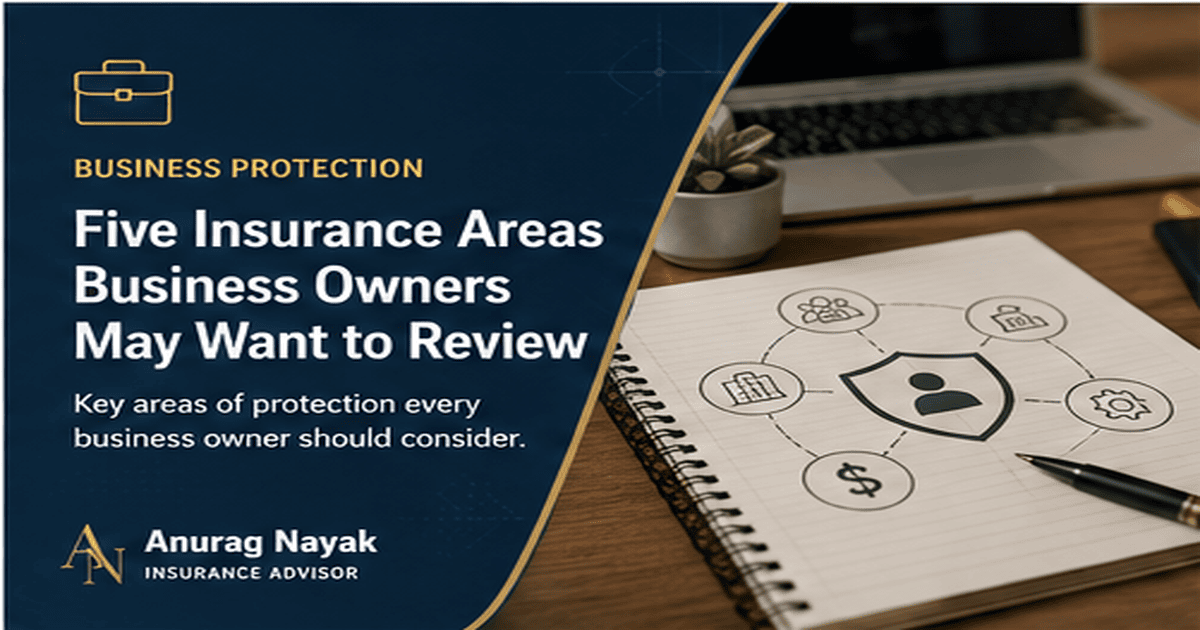
Abstract illustration showing business-owner insurance responsibilities

A business creates financial responsibilities that may not exist in the same way for an employee. The owner may be responsible for personal income, business debt, employees, a partner, a family and the continuity of the company at the same time.

That does not mean every business needs every type of insurance. It means the responsibilities are worth identifying before discussing products.

Here are five areas a business owner may want to review.

1. Personal protection for the owner

Business owners often focus on protecting the company and overlook the fact that their household may still depend on their personal ability to work and earn income.

Questions can include:

  • What income does the family rely on from the business?
  • What happens to household cash flow if the owner cannot work?
  • Are personal debts or mortgages connected to business income?
  • Is existing personal life, critical illness or disability coverage still appropriate?

The personal and business conversations are related, but they are not identical.

2. Key-person exposure

Some businesses depend heavily on one or two people for sales, technical knowledge, client relationships, operations or financing.

A key-person review asks what the financial impact could be if one of those people dies or becomes unable to work, and what resources the business would have to respond.

Insurance may be one possible funding tool. The amount and structure depend on the actual financial exposure, not simply the person’s title.

3. Ownership and buy-sell funding

A shareholder or partnership agreement may describe what happens when an owner dies, becomes disabled, retires or leaves the business. The legal agreement and the funding arrangement are separate questions.

If insurance is intended to help fund a buy-sell obligation, the policy ownership, beneficiary structure, amount and agreement terms should be coordinated with legal and tax professionals.

The insurance policy does not replace the agreement.

4. Business debt and guarantees

Loans, lines of credit, equipment financing, leases and personal guarantees can create obligations that continue even when the person who generated the business income is no longer available.

A review can identify which obligations are material and whether existing resources are sufficient to address them.

Avoid assuming that a lender’s insurance or a corporate policy automatically solves every debt exposure. Read the actual terms and understand who owns the coverage and who receives the benefit.

5. Employee benefits

For businesses with employees, group health, dental, life and disability benefits can become part of the overall compensation arrangement.

A plan review may consider:

  • what benefits are most relevant to the workforce
  • employer budget and cost-sharing
  • eligibility rules
  • coverage maximums
  • employee communication
  • how the plan changes as the company grows

The objective is not to promise better retention or lower costs. It is to understand the plan design and whether it reflects the business’s current needs.

Start with responsibilities, not tax outcomes

Corporate-owned insurance can involve tax and legal considerations. Those outcomes depend on the policy structure, corporate circumstances and current legislation.

For that reason, insurance conversations for business owners should be coordinated with the company’s accountant, lawyer or tax professional where appropriate rather than relying on broad statements about tax advantages.

A useful first review simply maps the people and obligations the business depends on and identifies which questions deserve deeper attention.

Sources and further reading

This article is for general educational purposes only and is not legal, tax, accounting or individual insurance advice. Business arrangements should be reviewed with the appropriate professionals.

Educational information only. This article is general information and is not personal insurance, investment, legal, accounting or tax advice. Product features, tax rules and licensing requirements may change.
← Disability Insurance: Questions to Ask When Your Income Depends on Your Ability to WorkWhat Should an Employer Consider in an Employee Benefits Plan? →

Have a question about your situation?

Start with what you already have and the decision you are trying to make.

Book a Consultation
(opens in a new tab)
What to expect first
View All Insights
Anurag Nayak
Insurance Advisor

Helping Canadian professionals, families and business owners understand insurance, workplace benefits and investment options with greater clarity.

Insurance Advisor • BC • AB • ON

LinkedInFacebook

Who I Help

OverviewProfessionalsBusiness OwnersFamilies

Services

OverviewPersonal InsuranceInsurance for Business OwnersEmployee BenefitsRegistered Investment OptionsNon-Registered Investment OptionsPolicy Reviews

Contact

contact@anuragnayak.ca+1 250-731-5313
Book a Consultation
(opens in a new tab)
What to ExpectSend a MessageInsights

Anurag Nayak is licensed to provide insurance services in British Columbia, Alberta and Ontario. Product and service availability may vary by province, insurer, eligibility and applicable licensing requirements.

Information on this website is provided for general educational purposes only and is not personal insurance, investment, legal, accounting or tax advice. A personal recommendation requires an appropriate needs, suitability, eligibility and licensing review. Product features, tax rules and licensing requirements may change.

PrivacyTerms & DisclaimerAccessibility

© 2026 Anurag Nayak.

Business Protection

Five Insurance Areas Business Owners May Want to Review

Review personal protection, key people, ownership agreements, business debt and employee benefits without beginning with complicated tax strategies.

Abstract illustration showing business-owner insurance responsibilities

A business creates financial responsibilities that may not exist in the same way for an employee. The owner may be responsible for personal income, business debt, employees, a partner, a family and the continuity of the company at the same time.

That does not mean every business needs every type of insurance. It means the responsibilities are worth identifying before discussing products.

Here are five areas a business owner may want to review.

1. Personal protection for the owner

Business owners often focus on protecting the company and overlook the fact that their household may still depend on their personal ability to work and earn income.

Questions can include:

  • What income does the family rely on from the business?
  • What happens to household cash flow if the owner cannot work?
  • Are personal debts or mortgages connected to business income?
  • Is existing personal life, critical illness or disability coverage still appropriate?

The personal and business conversations are related, but they are not identical.

2. Key-person exposure

Some businesses depend heavily on one or two people for sales, technical knowledge, client relationships, operations or financing.

A key-person review asks what the financial impact could be if one of those people dies or becomes unable to work, and what resources the business would have to respond.

Insurance may be one possible funding tool. The amount and structure depend on the actual financial exposure, not simply the person’s title.

3. Ownership and buy-sell funding

A shareholder or partnership agreement may describe what happens when an owner dies, becomes disabled, retires or leaves the business. The legal agreement and the funding arrangement are separate questions.

If insurance is intended to help fund a buy-sell obligation, the policy ownership, beneficiary structure, amount and agreement terms should be coordinated with legal and tax professionals.

The insurance policy does not replace the agreement.

4. Business debt and guarantees

Loans, lines of credit, equipment financing, leases and personal guarantees can create obligations that continue even when the person who generated the business income is no longer available.

A review can identify which obligations are material and whether existing resources are sufficient to address them.

Avoid assuming that a lender’s insurance or a corporate policy automatically solves every debt exposure. Read the actual terms and understand who owns the coverage and who receives the benefit.

5. Employee benefits

For businesses with employees, group health, dental, life and disability benefits can become part of the overall compensation arrangement.

A plan review may consider:

  • what benefits are most relevant to the workforce
  • employer budget and cost-sharing
  • eligibility rules
  • coverage maximums
  • employee communication
  • how the plan changes as the company grows

The objective is not to promise better retention or lower costs. It is to understand the plan design and whether it reflects the business’s current needs.

Start with responsibilities, not tax outcomes

Corporate-owned insurance can involve tax and legal considerations. Those outcomes depend on the policy structure, corporate circumstances and current legislation.

For that reason, insurance conversations for business owners should be coordinated with the company’s accountant, lawyer or tax professional where appropriate rather than relying on broad statements about tax advantages.

A useful first review simply maps the people and obligations the business depends on and identifies which questions deserve deeper attention.

Sources and further reading

This article is for general educational purposes only and is not legal, tax, accounting or individual insurance advice. Business arrangements should be reviewed with the appropriate professionals.

Anurag Nayak

Share -